Beyond the Instagram Feed
Social media has been a game-changer for the restaurant industry. Beautiful food photography, behind-the-scenes stories, and viral reels have helped countless restaurants build an audience. But relying solely on social media in 2026 is like building your house on rented land.
Algorithm changes can slash your reach overnight. Platform outages can make you unreachable. And at the end of the day, you do not own your followers — the platform does.
A dedicated website gives you a home base that you fully control, where every visit brings a potential diner closer to making a reservation.
The True Cost of Third-Party Platforms
Many restaurants have become dependent on third-party booking and delivery platforms. While these services provide convenience, the costs add up quickly:
Commission fees eat into margins
Most booking platforms charge between 15% and 30% per cover or order. For a restaurant already operating on thin margins, this can be the difference between profit and loss.
You lose the customer relationship
When a diner books through a third-party platform, the platform owns that customer data. You cannot follow up, you cannot build loyalty, and you cannot market to them directly. The next time that customer is hungry, the platform — not you — decides where to send them.
Limited brand control
On a third-party platform, your restaurant is just one listing among thousands. You are constrained by their templates, their rules, and their design. Your unique atmosphere and personality get flattened into a standardized card.
What Your Own Website Should Include
A restaurant website does not need to be complex. In fact, simplicity is key. But it should cover the essentials that diners are looking for:
Your menu, always up to date
This is the number one reason people visit a restaurant's website. Your menu should be easy to read, mobile-friendly, and always current. Avoid PDF menus that are hard to read on phones — use a structured format that adapts to any screen size.
Include prices, dietary indicators (vegetarian, vegan, gluten-free), and seasonal specials. If your menu changes frequently, make sure updating it takes minutes, not hours.
Opening hours and location
It sounds basic, but you would be surprised how many restaurant websites bury this information or display outdated hours. Your opening hours and location should be visible within seconds of landing on your page.
An embedded map makes it easy for first-time visitors to find you. Include parking information and public transport options if relevant.
Integrated reservation system
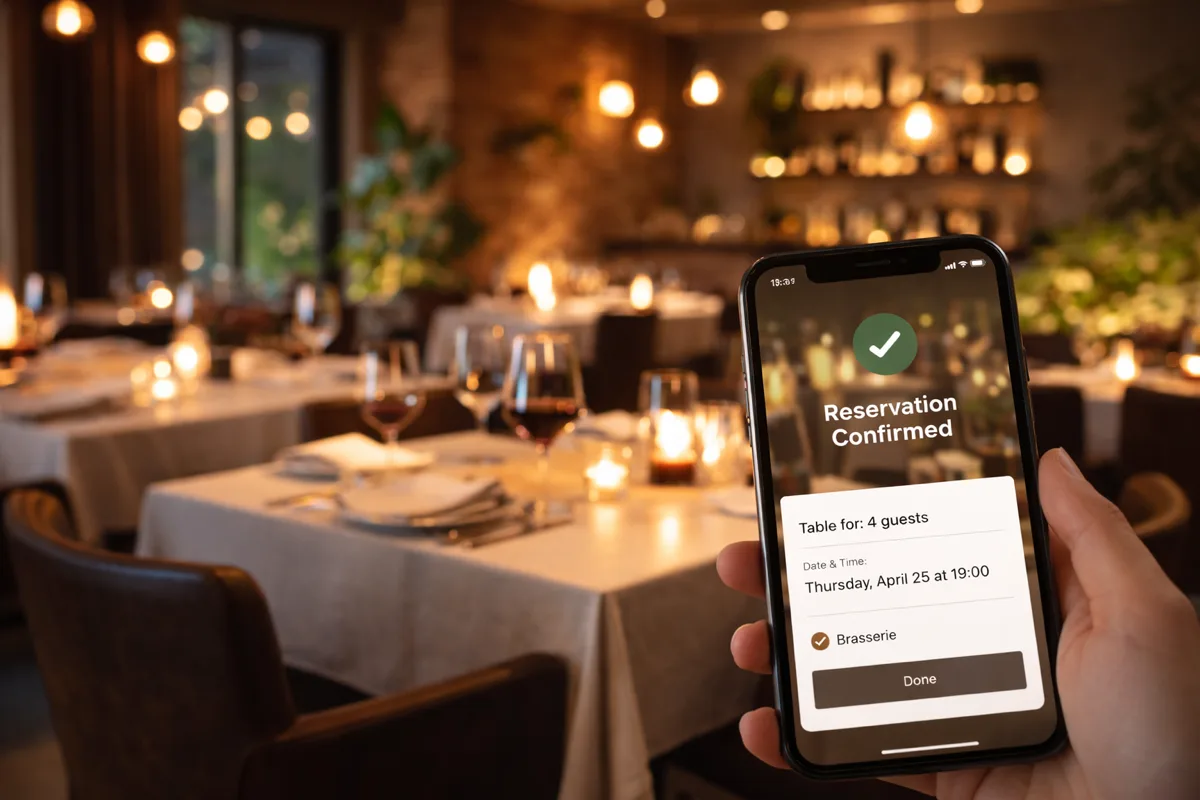
This is where the real value lies. An integrated booking system on your own website means:
- No commission fees — every reservation is pure profit
- You own the data — build a customer database for direct marketing
- Automatic confirmations — reduce phone calls and manual work
- Table management — optimize seating capacity and reduce wait times
- No-show protection — send reminders and optionally take deposits
Atmosphere and story
Photos of your interior, your team, and your dishes help set expectations. A short story about your restaurant's origins, your chef's philosophy, or your sourcing practices creates an emotional connection that no platform listing can match.
The SEO Advantage of Your Own Website
When someone searches for "Italian restaurant in [your city]" or "best brunch near me," Google prioritizes businesses with their own websites. Here is why:
Rich, relevant content
A dedicated website lets you create content around your cuisine, ingredients, events, and philosophy. This gives search engines much more to work with than a simple platform listing.
Local SEO signals
Your website sends powerful local SEO signals when it includes your address, phone number, opening hours, and customer reviews. Combined with a Google Business Profile, this can dramatically improve your visibility in local searches.
Speed and mobile experience
Google rewards fast-loading, mobile-optimized websites. A well-built restaurant page that loads in under two seconds and looks great on any device will rank higher than a clunky, slow alternative.
Managing Reservations Without the Headache
The thought of managing an online booking system might seem daunting, but modern tools have made it remarkably simple:
Real-time availability
Customers see exactly which time slots are available and can book instantly. No back-and-forth phone calls, no waiting for confirmation.
Capacity control
Set your maximum covers per time slot, block out private events, and manage special occasions — all from a single dashboard.
Customer insights
Track booking patterns, identify your most loyal customers, and understand peak times. This data helps you make smarter decisions about staffing, specials, and marketing.
Automated communications
Confirmation emails, reminder messages, and follow-up requests for reviews can all be automated. This saves hours of manual work every week.
Reducing Platform Dependency Step by Step
You do not need to abandon third-party platforms overnight. A gradual transition works best:
- Launch your own website with menu, hours, and booking capability
- Add a booking incentive — offer a small discount or a complimentary drink for direct bookings
- Promote your website on social media, receipts, and table cards
- Track the shift — monitor how many bookings come through your site vs. platforms
- Gradually reduce platform presence as direct bookings grow
Getting Started is Easier Than You Think
Building a restaurant website used to mean hiring a developer, buying hosting, and managing updates yourself. That is no longer the case.
With PagePilot, you can build a complete restaurant landing page with an integrated booking module in under an hour. Drag and drop your menu sections, add your gallery, configure your reservation system, and publish — all without writing a single line of code.
Your menu updates in real time. Your bookings go straight to your dashboard. Your customers stay yours.
Key Takeaways
- Third-party platforms take 15-30% of every transaction and own your customer data
- A dedicated website with integrated booking eliminates commission fees
- Menu, hours, location, and atmosphere are what diners look for first
- Local SEO gives your own website a significant discovery advantage
- The transition from platform dependency can be gradual and low-risk
Your restaurant's story deserves its own stage. Give it one.